 |
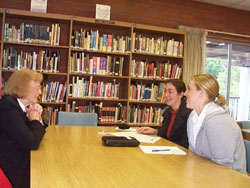
Mrs. R Interviewed By: |
|
. |
|
|
Window to the Past We had an opportunity to speak with a woman named Mrs R. She is 89 years old and presently lives in Rossmore. Her life story gave us an idea of what it would be like to be a teenager seventy-five years ago. She discussed several issues that impacted the first thirty years of her life. The two that we found most interesting were women's equality and health care. Mrs R. was raised in a farming family first in Idaho and then in Washington. One of six children, Mrs R. had several chores in the house. While her brothers were outside stacking the hay, she and her two sisters were inside helping their mother with the baking and washing. Today baking is done in an electric oven, and washing is done by machines. Back then homemade bread was baked on a wood stove, and hand-washed clothes were hung on a clothesline. Mrs R.'s family also produced
most of their own food. Her mother made most of the
girls clothes. She expressed an appreciation for modern conveniences that make it less difficult to be a homemaker. All of the people in Mrs R.'s family were educated. First and second grade was spent in a one room school. After the family moved to Washington, they attended a school with one classroom for every grade. Mrs R. attended a co-ed high school in a close-knit community. She recently went back for a reunion, that only two other former classmates attended. Mrs R. also went to college for one year in Idaho where she began taking Idaho geography and history, English, public speaking, and education courses. She never finished her second year because she and her intended married and moved to the location of his work. Because she married Mrs R. had to put off her dreams of becoming a teacher. Even though now this would seem unfair to a woman, in Ruth's time women were simply expected to place a family above a career. After four years the marriage fell apart and Mrs R. and her child moved to live with her parents. Mrs R. was finally able to continue her education and become a school teacher when she moved to California at the age of 34. As time has gone on Mrs R. has seen changes that allow women to complete their education early in life and enter the work force as
greater equals with men, although wages are still
not equal. She strongly approves of the new opportunities that are available to women. Throughout her life Mrs R. also witnessed many changes in health care. In her early childhood Mrs R.'s mother did most of the doctoring at home. Her family lived relatively far from town, so they rarely saw the doctor. Luckily they never had any medical emergencies.
Six of her mother's children were delivered at home using ether as an anesthetic. There were not any vaccines available for common childhood diseases, so all of the school children suffered from mumps and measles
and a variety of other childhood diseases at some point. Changes began appearing when Mrs R. became a teenager. A female doctor arrived in town and some vaccines were made available. Mrs R.'s own children were all born in hospitals. Mrs R. now enjoys the luxury of choosing a male or female doctor. Again Mrs R. expressed an appreciation for the greater opportunities awarded to women now. Mrs R. saw many other changes. Trains and steamships were the main mode of distance travel. Then came the automobile and airplane. In communications the telephone came into use, and the telegraph. There were phonographs, then radios, then televisions. And now computers. There have been amazing improvements in medicine. All these modern improvements and all these inventions are so marvelous! We really appreciate the chance we had to speak with someone who experienced the past firsthand. Her awareness of changes that have been made has encouraged us to no longer take for granted all that we have. We hope that in the future our own observations can give such a powerful message to younger generations. |
|